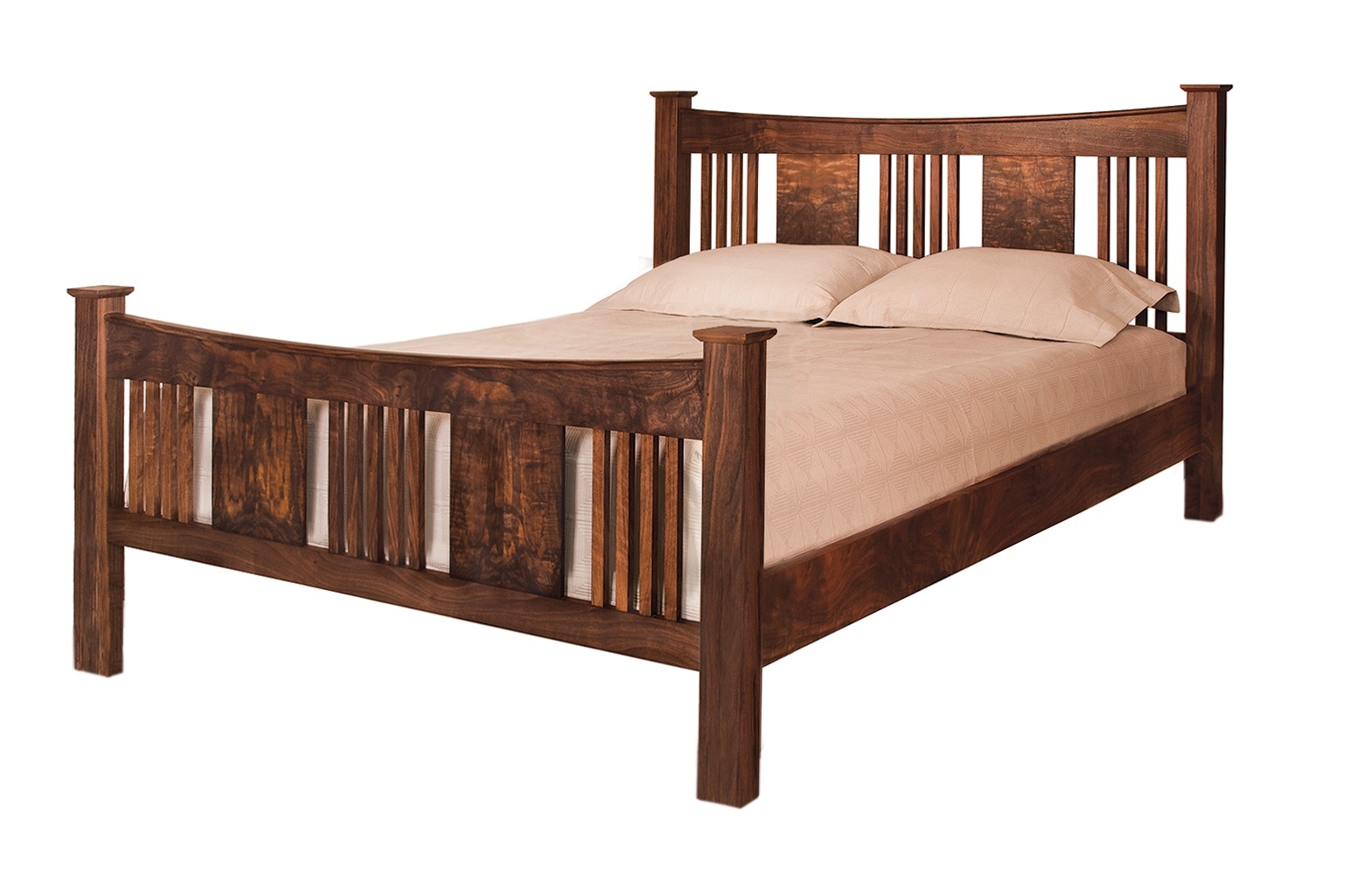
The Joinery
The problem
A made-to-order furniture catalogue displayed most pieces in a single wood species, so a shopper could not see the tone they were actually buying before a ten-to-fifteen-week build began.
The approach
Render every piece across the full range of wood species and upholstery materials the workshop offers, measured against the client's own product photography rather than against a swatch.
What was built
130 products across 17 categories, each rendered in five wood species; nineteen upholstered pieces additionally rendered in ten fabric and leather options — 1,600 images at completion.
The outcome
Live on The Joinery's product pages and configurators, with 338 images delivered across 68 products in the first two production rounds.
The Joinery is a Portland, Oregon furniture maker that builds to order — the site itself states a ten-to-fifteen-week lead time on a finished piece. Most of the catalogue was photographed in a single wood species, which meant a shopper choosing between walnut and maple was choosing blind: the tone they were actually going to receive did not exist yet as a photograph, and in most cases did not exist yet as a piece of furniture.

The brief was to close that gap: reproduce every piece in the catalogue across the workshop’s full wood range, and for the pieces that ship upholstered, across its fabric and leather range as well. 130 products across 17 categories — beds, dining tables, dressers, sofas, chairs, benches, storage — each rendered in five wood species. Nineteen of those products are upholstered, and each of those carries ten additional fabric and leather options on top of the wood, since a customer choosing a sofa is choosing two materials at once. At completion that is 1,600 finished product images, the large majority of them upholstery combinations: a single sofa in five woods and ten fabrics is fifty images, all from one physical sample.
The render itself is held to the client’s own product photography, not to a wood swatch — swatches are shot under different light than the studio and drift cooler and flatter than the real material, which produces a technically accurate but visibly wrong render. Every wood tone is checked against photographs of that species already in the catalogue before it ships, and each set of five species is checked against itself for the one failure mode that matters here: the model quietly recomposing the shot — a different camera angle, a piece drawn larger — identically across all five renders, so the set agrees perfectly with itself and only disagrees with the photograph.
Two production rounds are complete: beds, then dining tables, nightstands and dressers, together 68 of the 130 products and 338 delivered images, produced in roughly two weeks. A third round — benches, bookcases, desks and file cabinets — is rendered and in review.
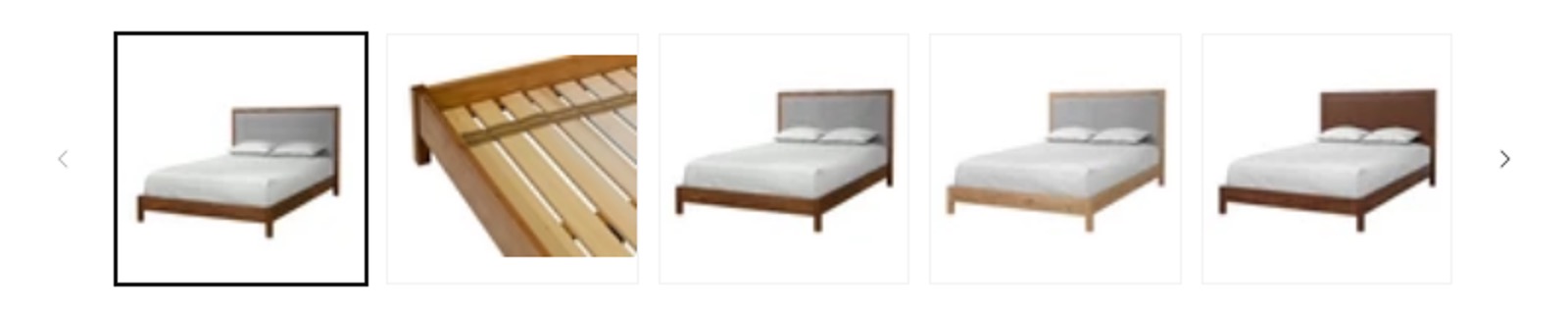
The renders are not a deck. They are the product photography on thejoinery.com today: open any completed piece and the gallery steps through the wood species exactly as rendered, feeding a configurator that lets a shopper pick wood, upholstery and size before ordering. At The Joinery’s own list prices, covering the thirteen-piece bed range alone in all five species would otherwise have required 52 additional finished beds to exist — upwards of $228,000 of furniture — before any of it could be photographed. Most of it never needed to be built at all.
Rendered a made-to-order furniture catalogue across every wood species and upholstery option the workshop offers — before a single additional piece was built.