Wildfire Ready
The problem
Home hardening has an image problem — people picture a gravel lot with no plants, so the fixes feel like a sacrifice instead of a beautiful, livable option.
The approach
Show, don't tell: a real architectural render library, a familiar makeover-show format with recognizable hosts, and a side-by-side guide that puts a real hazard next to its hardened replacement.
What was built
~20-image render library, a four-version TV pitch deck backed by a 237MB master Photoshop document, and ~50 real inspection photos redrawn into a consistent illustrated style.
The outcome
Picked up for production by Fire Safe People — casting and release details are under NDA, but the makeover-show format proven here is heading toward an actual audience.
Wildfire home-hardening has an image problem: people picture a gravel lot with no plants, so the fixes feel like a sacrifice instead of a beautiful, livable option. This body of work, produced for Ralph Bloemers — Director of Fire Safe Communities at Green Oregon Alliance — across February and August–September 2025, attacks that problem three ways — show people what “hardened” actually looks like, borrow a TV format people already trust, and put a real hazard photo next to its hardened replacement so the comparison reads at a glance. It is generative AI applied to climate-and-safety messaging at a scope a wildfire-prevention nonprofit could not otherwise afford to commission.
Fire-Hardened Home & Landscape Renders
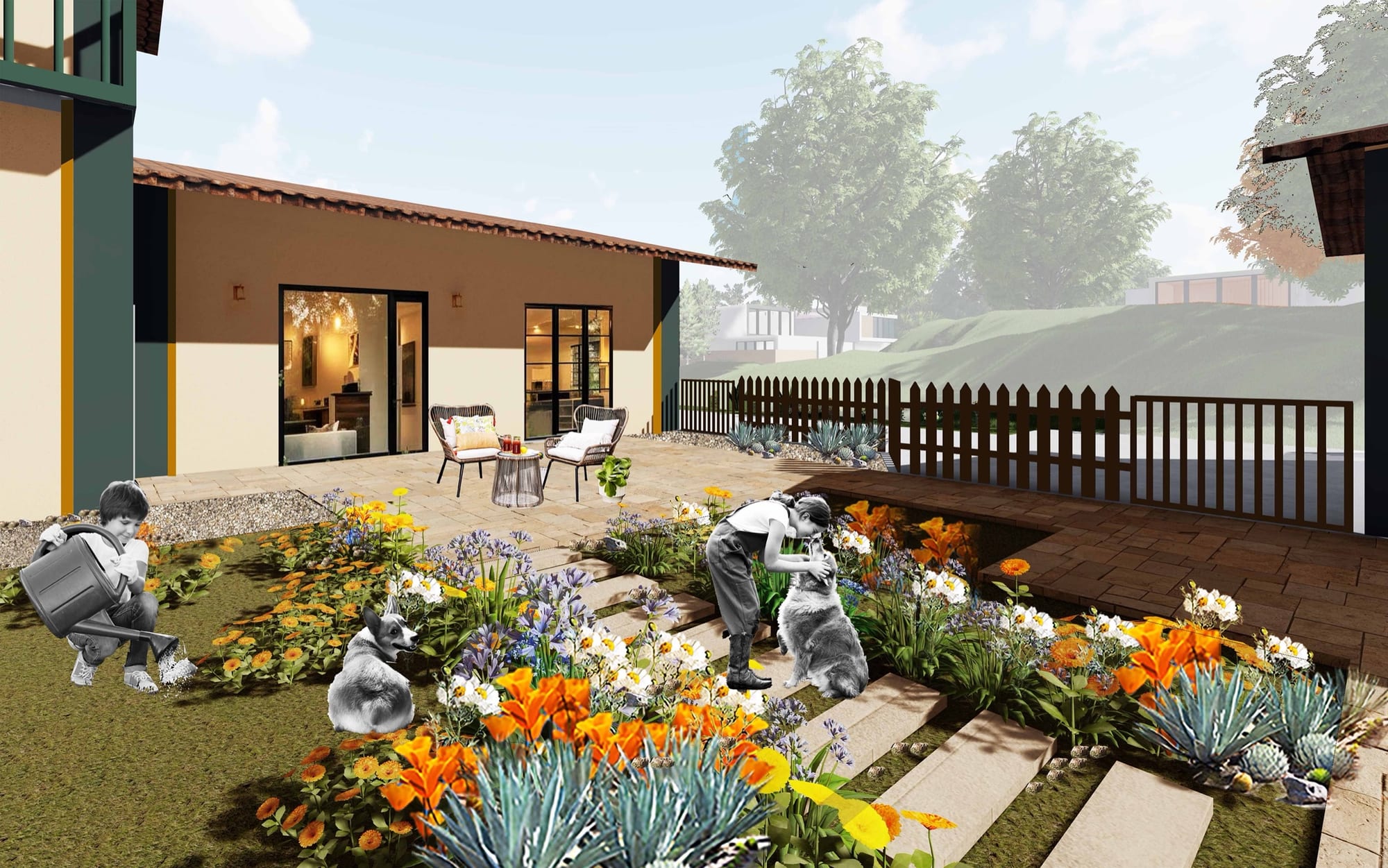
The renders work the defensible-space zones deliberately: Zone 0, the first five feet, is non-combustible throughout — decomposed granite, stone paving, low succulents, masonry walls in place of wood fencing. Beyond it the planting gets lush — poppies, kangaroo paw, flowering trees, lawn — proving a hardened landscape can still be a beautiful one.
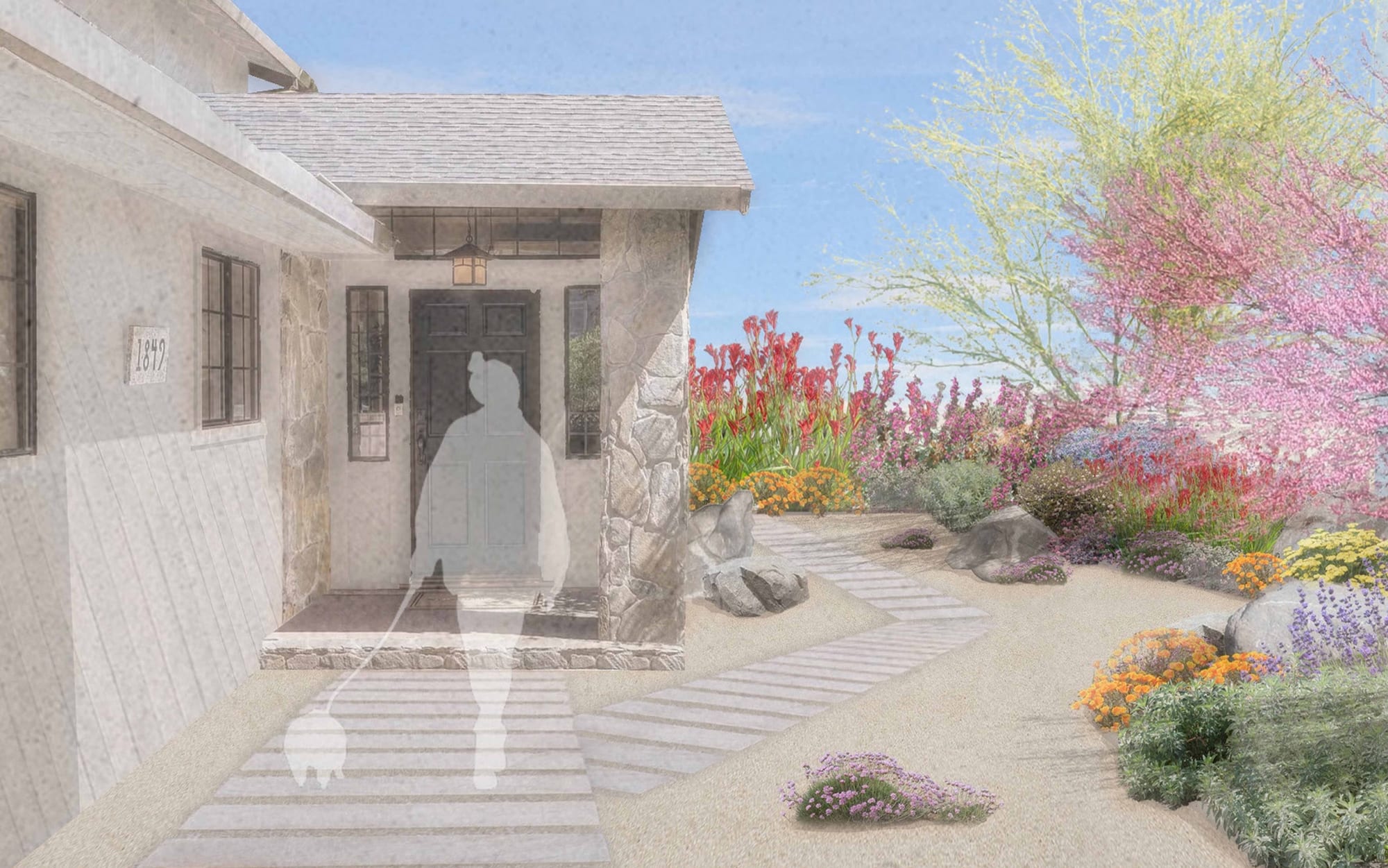
Built as a deep stack of large-format layered Photoshop documents, the set spans photo-real dusk and night renders, mixed-media collage renders with cut-out figures and pets, and an illustrated black-and-white streetscape version of the same neighborhood for editorial use — roughly 20 images in the optimized delivery library.
Wildfire Ready Makeover, with the Scott Brothers
The largest project of the year, and a format shift: instead of a PSA, a home-improvement television format. The premise takes the familiar renovation-show structure and points it at wildfire resilience — hosts walk a homeowner through hardening their house the way a makeover show walks them through a kitchen.
A note on likenesses. The pitch casts Drew and Jonathan Scott — HGTV’s Property Brothers — as the show’s hosts, branded here as “the Scott Brothers.” Like the celebrity likenesses in Fast Fires Are Preventable, this is an unlicensed pitch stand-in to sell the casting idea to the client, not a licensed or produced appearance. Shown here as concept art.
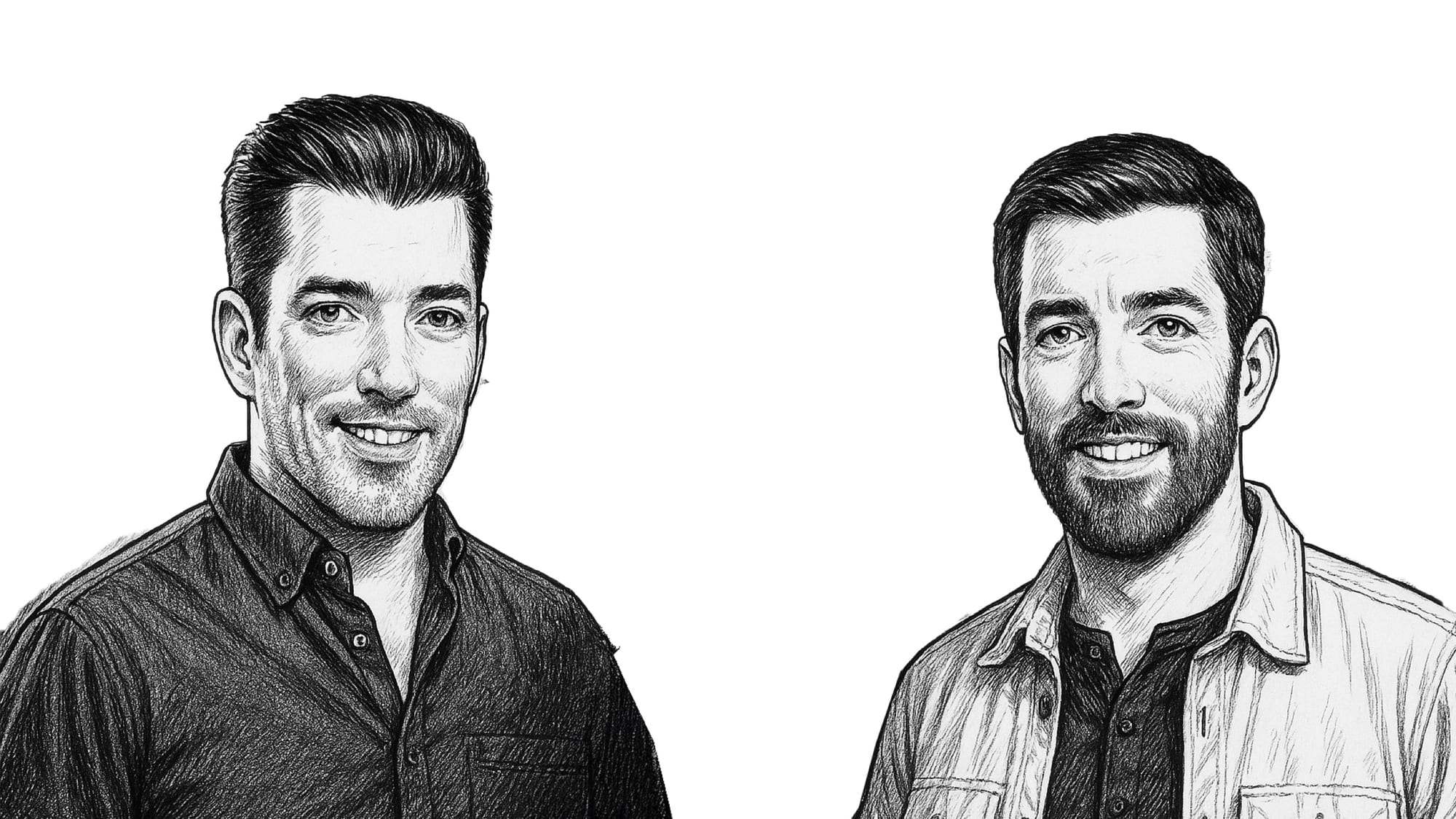
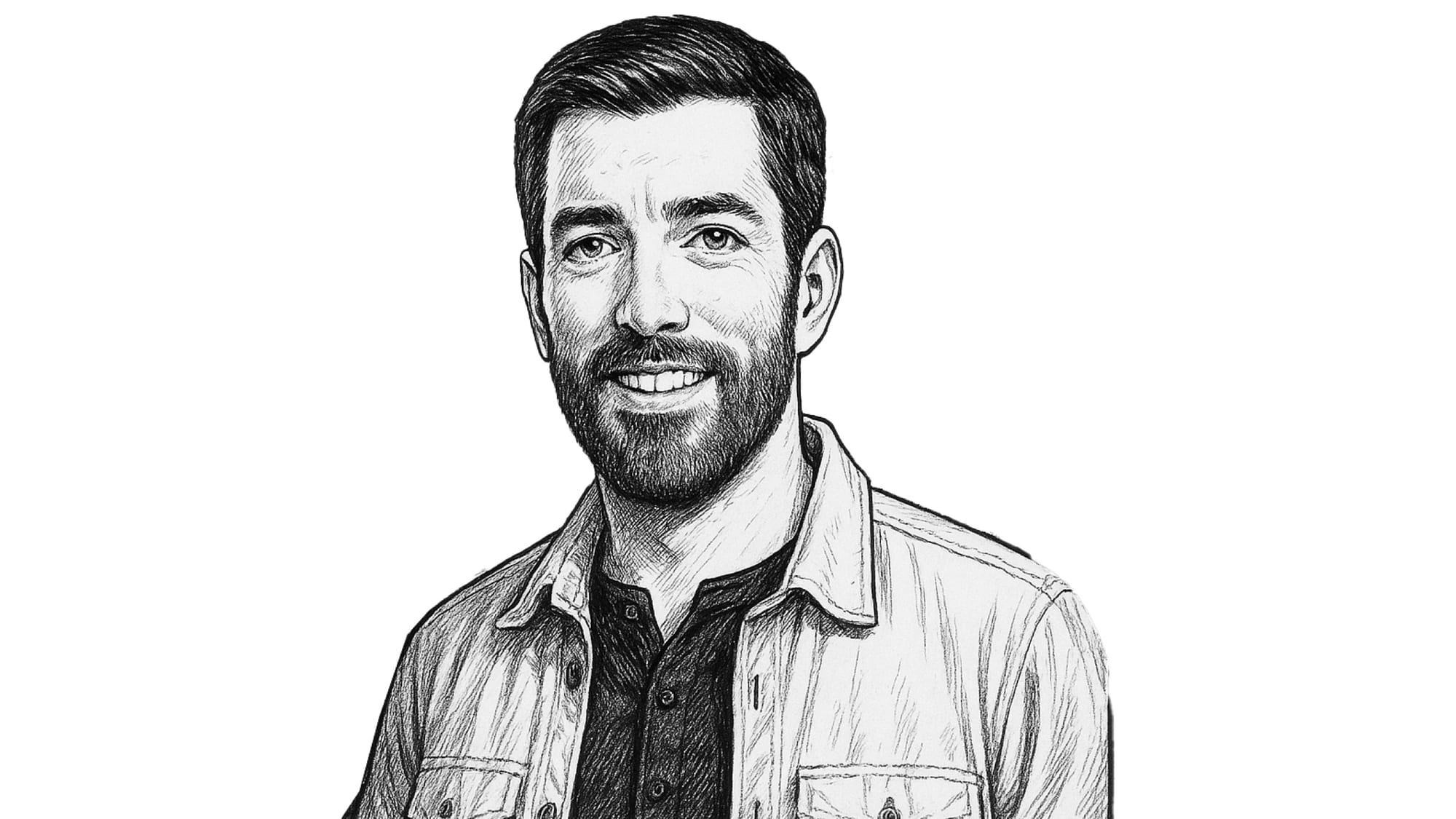
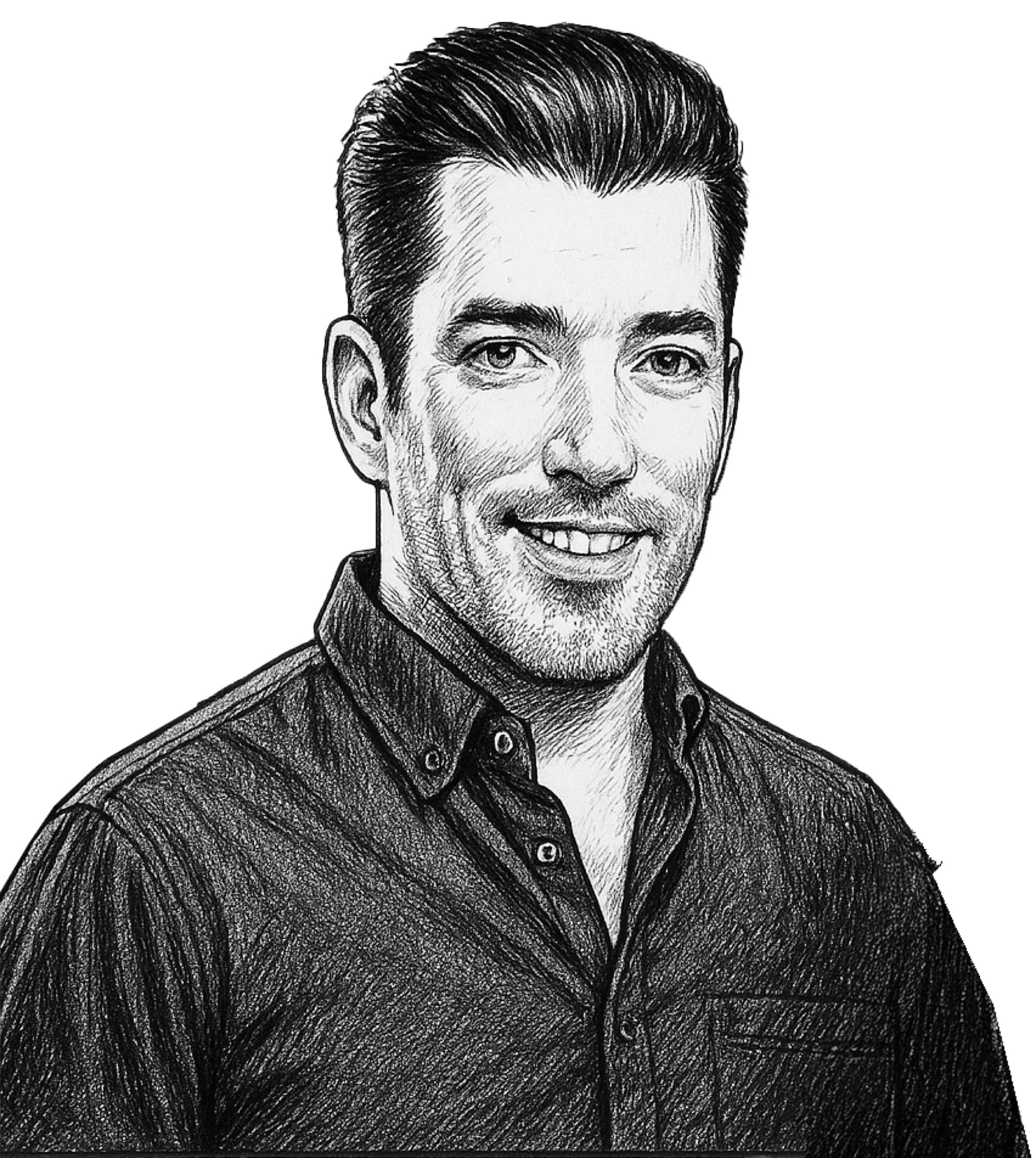
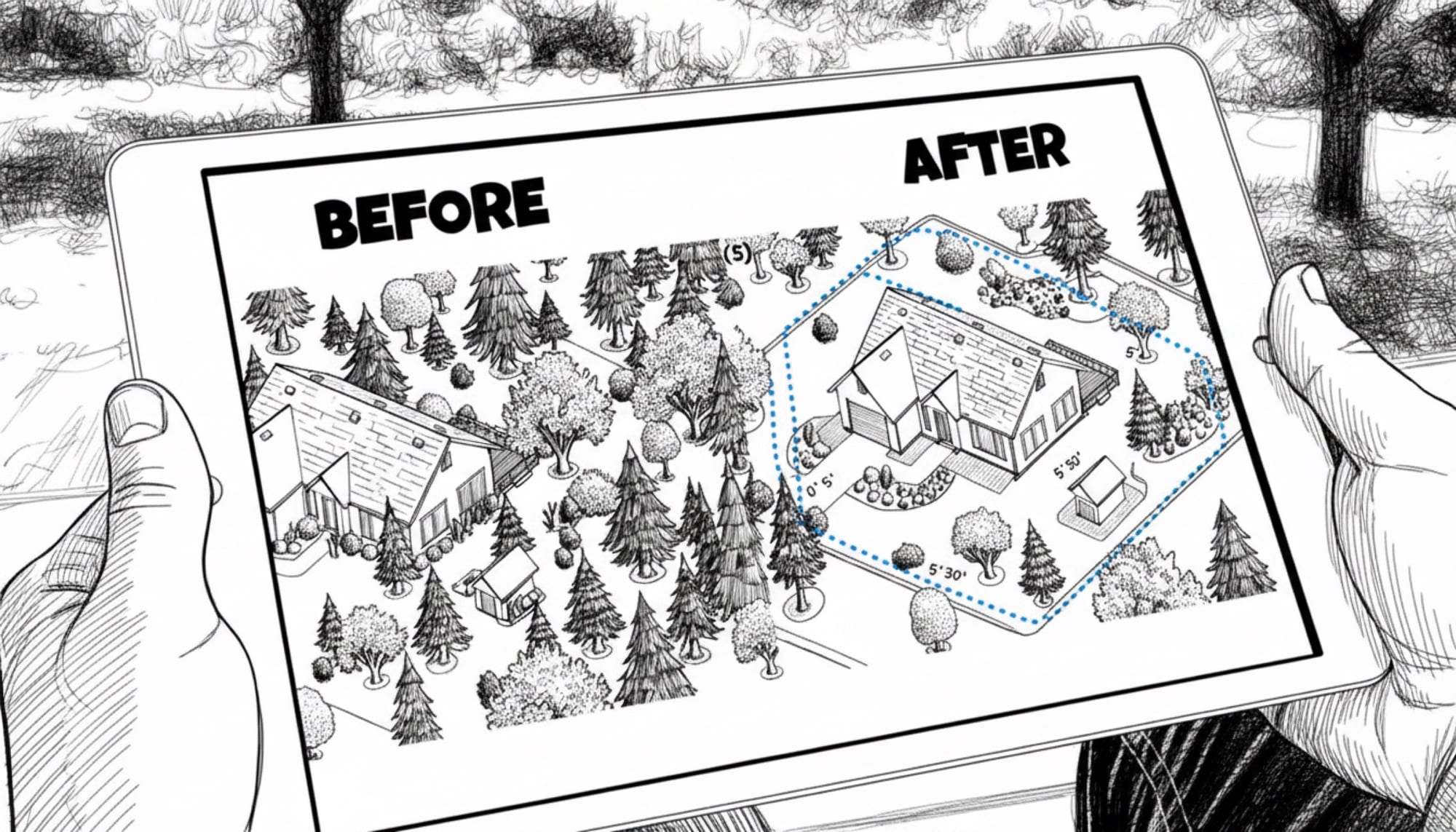
The full pitch package — assembled across four deck versions in roughly two weeks in late August, backed by a 237MB master Photoshop document — includes the dimensional metal-textured title identity, illustrated host portraits and reaction poses, pen-and-ink hardening illustrations for decks, front yards and entries, explainer graphics, and comic-strip storyboard panels of the hosts working the gutters/eaves/deck/doors checklist on camera.
From Risk to Resilience: Home Hardening in Practice
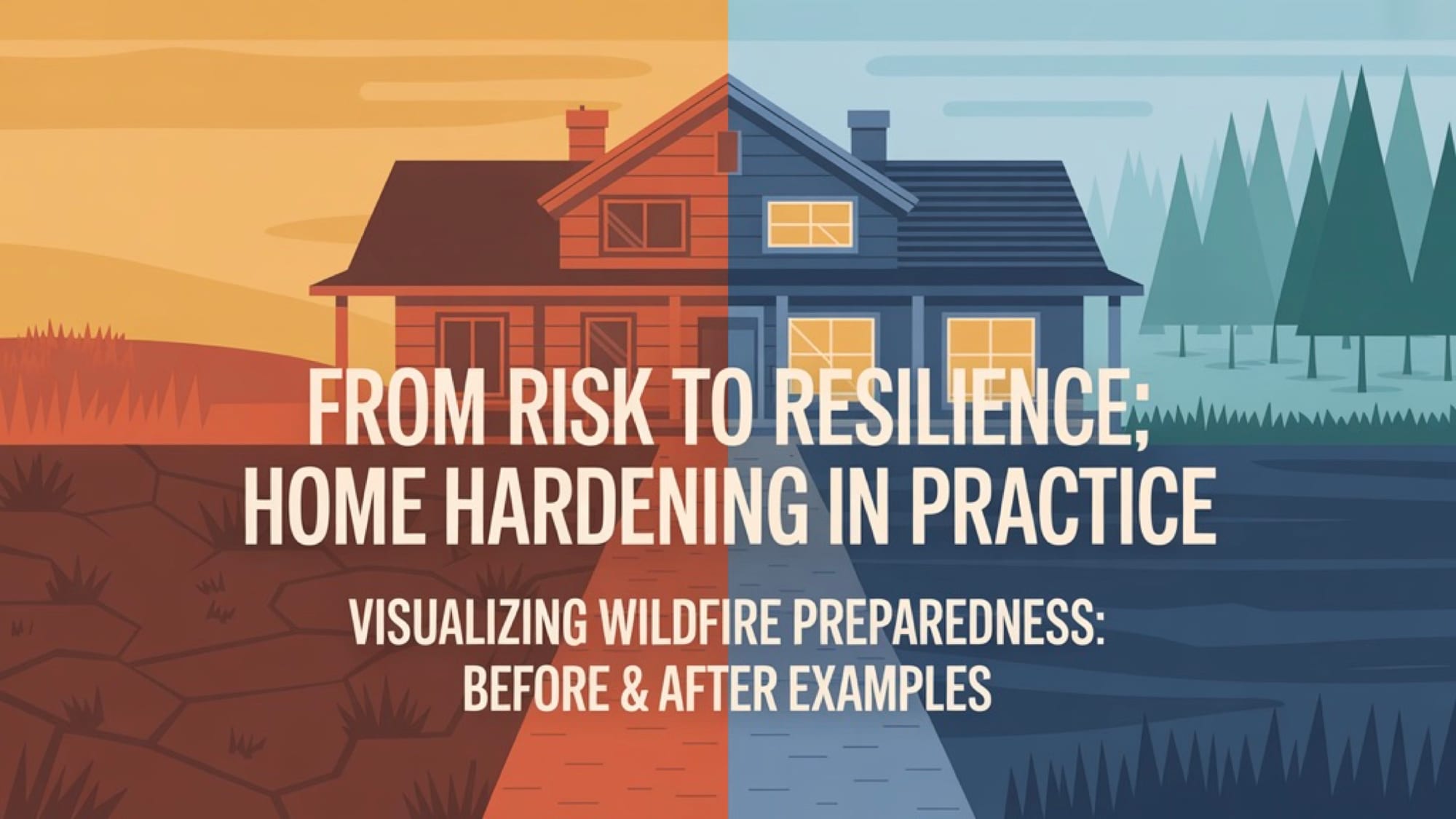
Built from a working library of roughly 50 real inspection and resident photographs, redrawn into a clean, consistent illustrated style so the comparison reads instantly, without the visual noise of real photography.
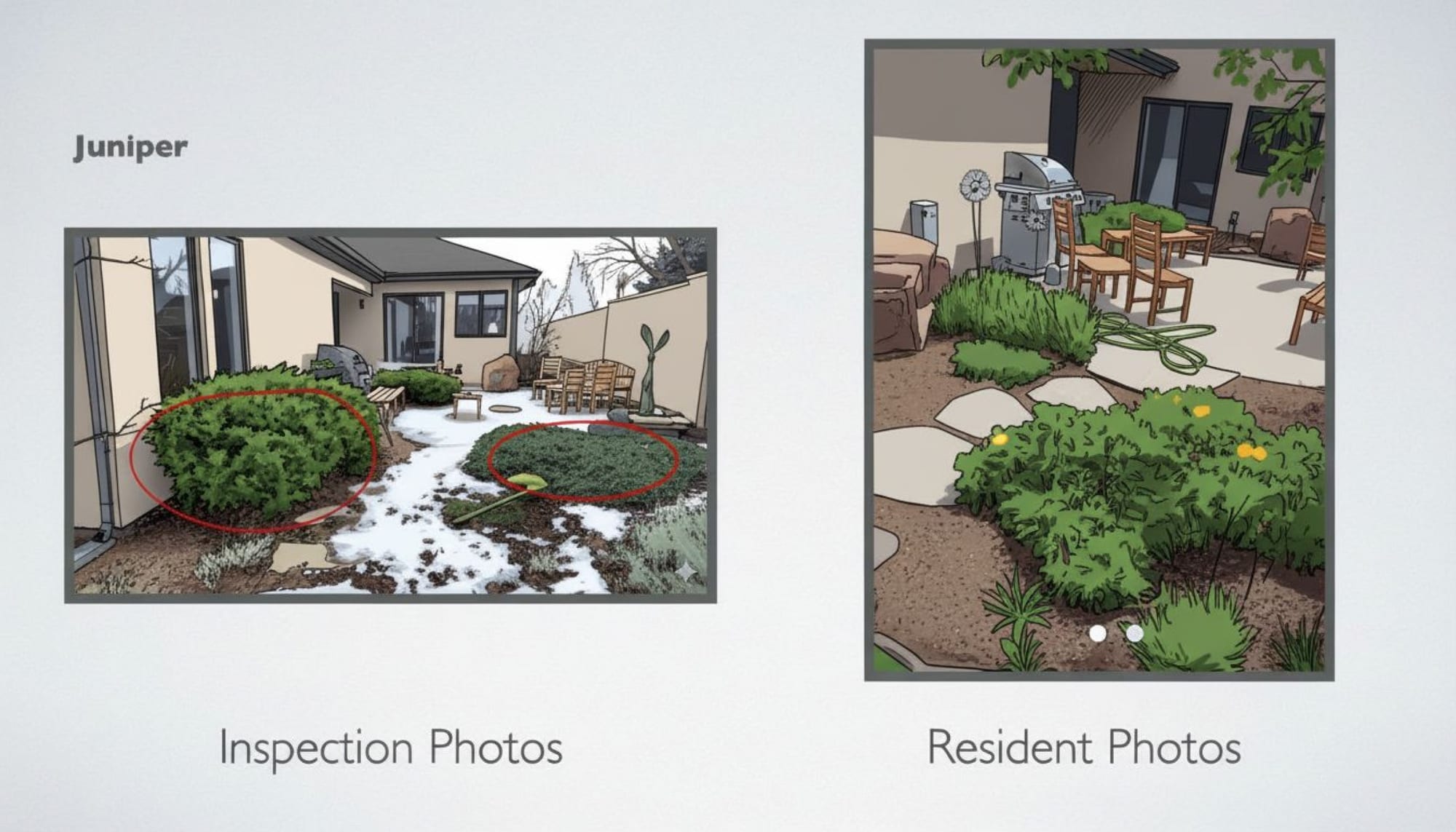
Laid out as two decks — a straight photographic version and an illustrated “comic” version — the redrawing is what makes the teaching legible: the raw inspection photos are cluttered and hard to parse, and the illustrated pass strips that away.
What the AI generation actually bought
Four separate specialist disciplines sit inside this one year of work — architectural visualization, illustrated host portraiture, information design, and large-scale photo redrawing. Generative tooling (Ideogram, Gemini, ChatGPT image tooling, Magnific upscaling) is what made commissioning all four, at pitch speed and before knowing which would land, possible at all: a ~20-image render library, a complete TV pitch package in about two weeks, and ~50 real photographs redrawn into one consistent style — a scope that would normally be several standalone contracts.
What happened after the pitch
This project, along with its companion campaign Fast Fires Are Preventable, was picked up for production by Fire Safe People — a step past the pitch that most concept work never reaches. Casting and release details are under NDA and aren’t disclosed here; what can be said is that the makeover-show format proven across this pitch package is now heading toward an actual audience, not just a client’s review deck.
A hardened home doesn't have to look like a gravel lot — the renders were built to prove it.