Pendleton Woolen Mills
The problem
An apparel brand producing thousands of accessory and apparel images per season cannot photograph its way through the volume at catalogue quality — and a wholesale sales meeting doesn't wait for a studio calendar.
The approach
Don't just deliver images — deploy the tools inside Pendleton's own systems and embed on-site during the first production cycle, so the pipeline survives the engagement.
What was built
Custom AI applications generating catalog-ready photography from Pendleton's own CAD assets: on-model, flat lay, clipped-to-white, styled lifestyle and product-flat treatments.
The outcome
1,419 images delivered across 61 styles in six weeks. Pendleton holds perpetual rights to the tools themselves, not just the output.
Pendleton Woolen Mills needed production-ready photography for its wholesale book and website — apparel, accessories, home goods, across every colorway a buyer needed to see — on a fixed deadline that a photography studio’s calendar was never going to hit. The Statement of Work names the target plainly: the end-of-May 2026 sales meeting.
The engagement wasn’t scoped as an image order. The Statement of Work — Round 1, dated ahead of that May sales meeting — calls for deploying custom AI applications directly inside Pendleton’s own Google Enterprise environment, migrating API access into Pendleton-controlled accounts, and embedding on-site during the first production cycle. The deliverable was never just pictures; it was a working pipeline Pendleton could keep. Under the SOW’s ownership terms, Pendleton holds perpetual internal rights to the specific application versions built and delivered — the tools, not only their output.
What the pipeline actually produces
The source is Pendleton’s own CAD assets — the technical garment files every apparel brand already has — rather than a photograph of a physical sample. From that, the pipeline generates five distinct treatments: on-model photography, flat lay, clipped-to-white product shots, styled lifestyle scenes, and product-flat renders for stacked colorway layouts.
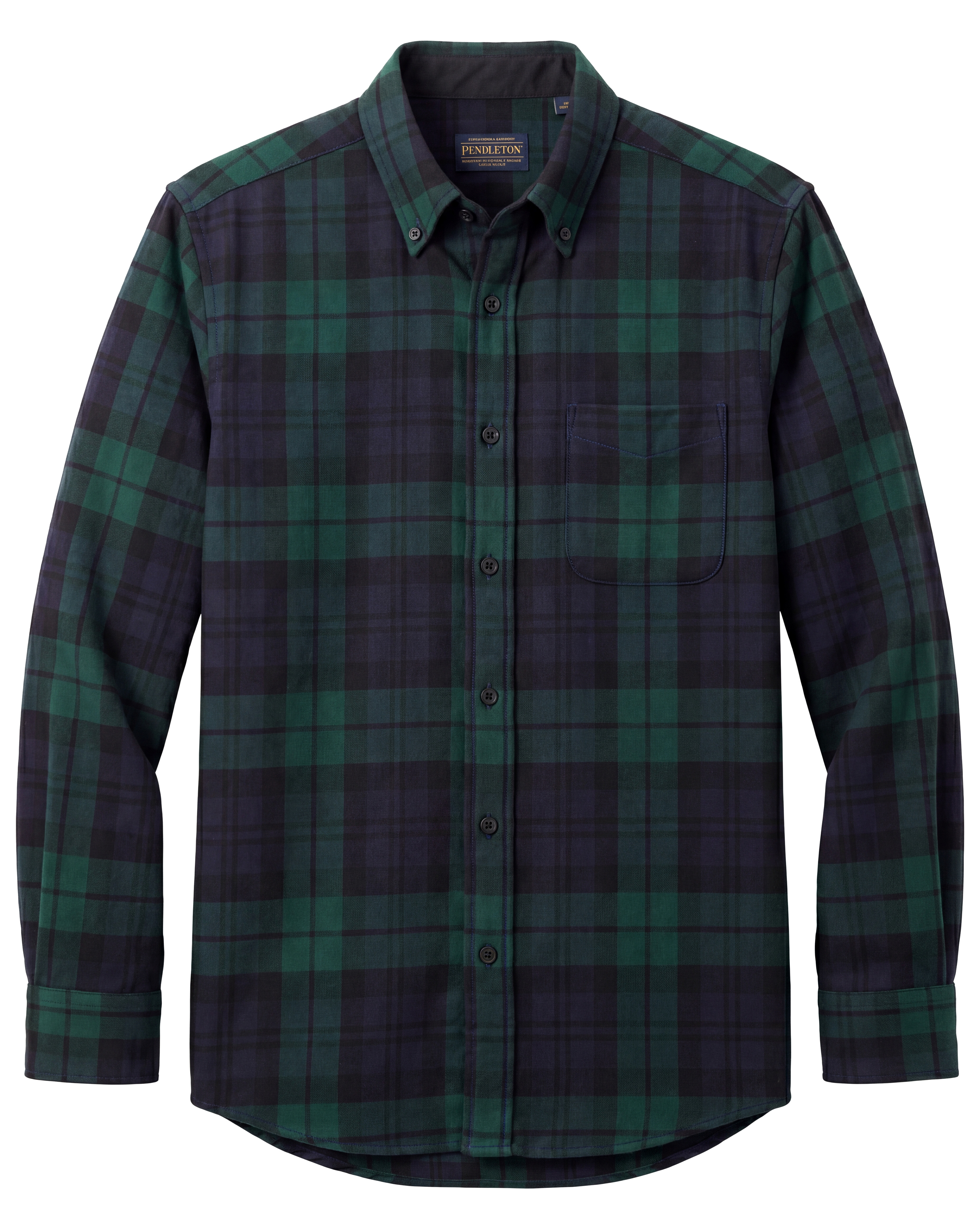
Six weeks of dated delivery rounds, April through June 2026, produced 1,419 images across 61 distinct styles — menswear and womenswear apparel, handbags, totes, wallets, hats, blankets and coverlets. On-model photography was the largest single category at 716 delivered images — and the Round 1 Statement of Work scoped on-model at roughly twenty images. What started as a pilot became, inside the same engagement, thirty-five times its original scope.
What the AI generation actually bought
The honest comparison is the one the SOW itself makes: a wholesale apparel brand’s alternative to this is booking a studio, a model, and a stylist for every colorway of every style, on a calendar that has to clear before a fixed sales-meeting date. Generating from CAD assets instead of a physical sample means a colorway can exist as a finished, on-brand photograph before a single unit is sewn — and the pipeline that makes that possible now runs inside Pendleton’s own systems, not Gavin’s.
A Round 1 pilot scoped for about twenty on-model images delivered seven hundred and sixteen.