An American Symphony — Benaroya Hall
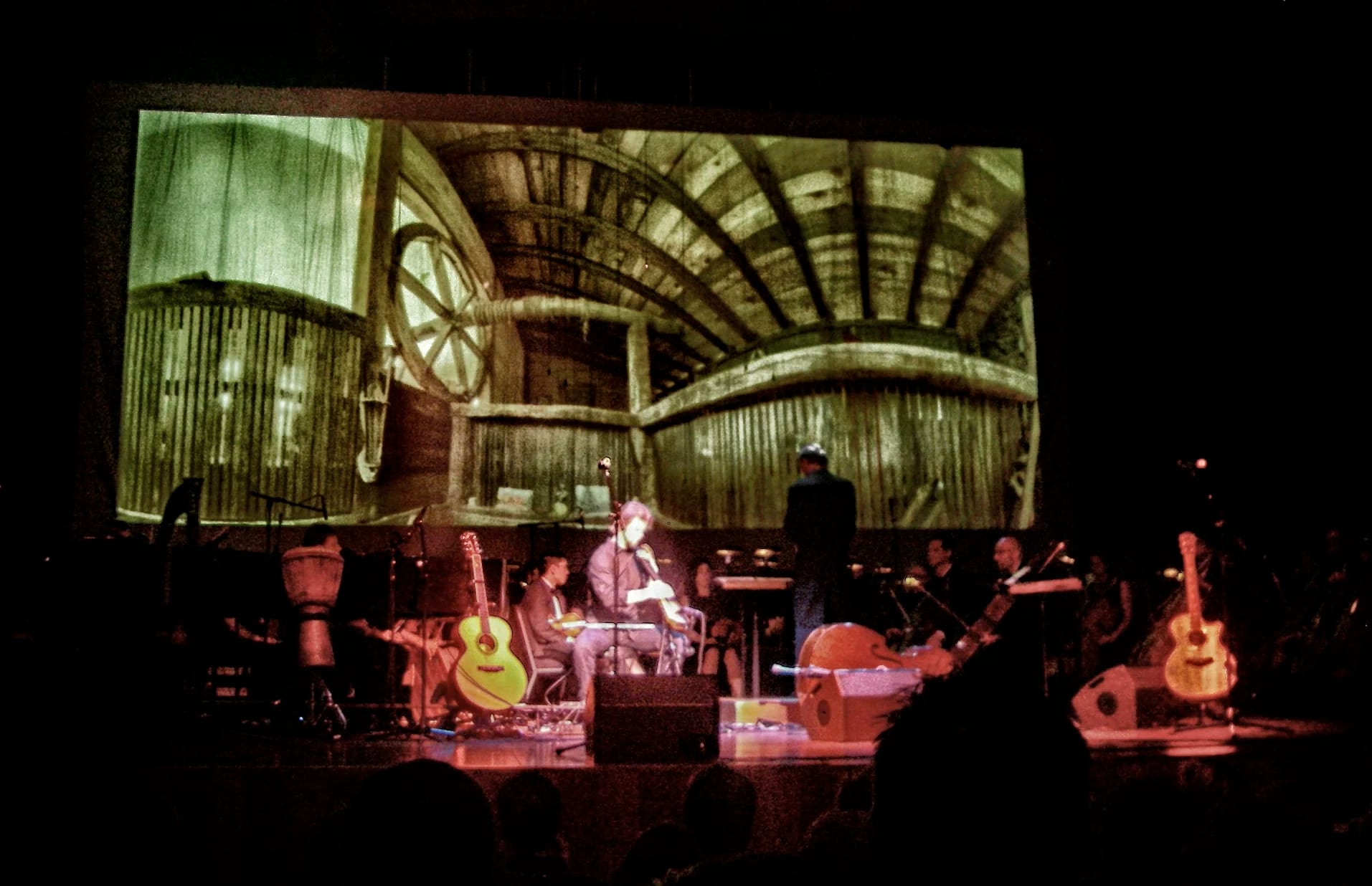
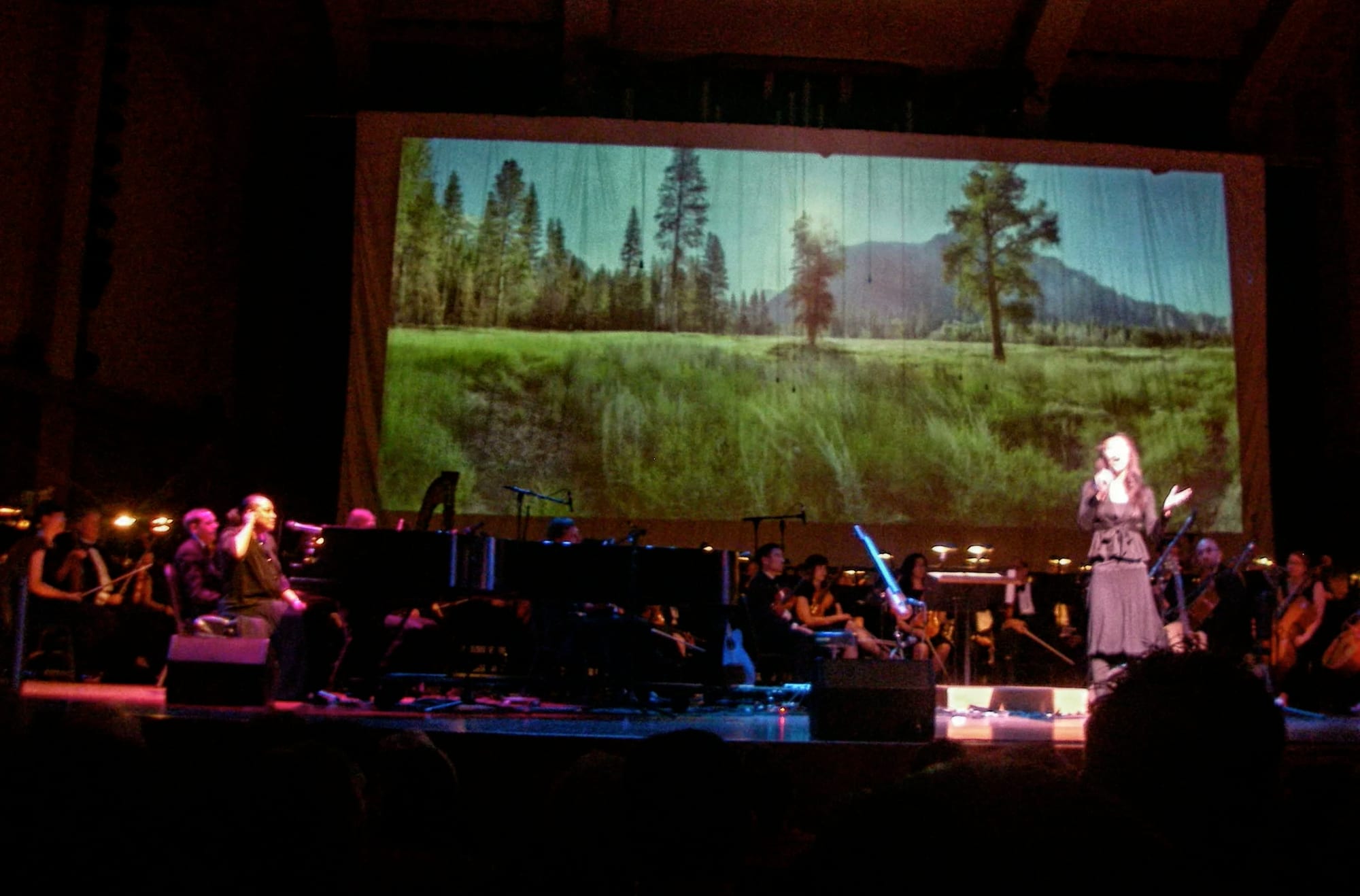
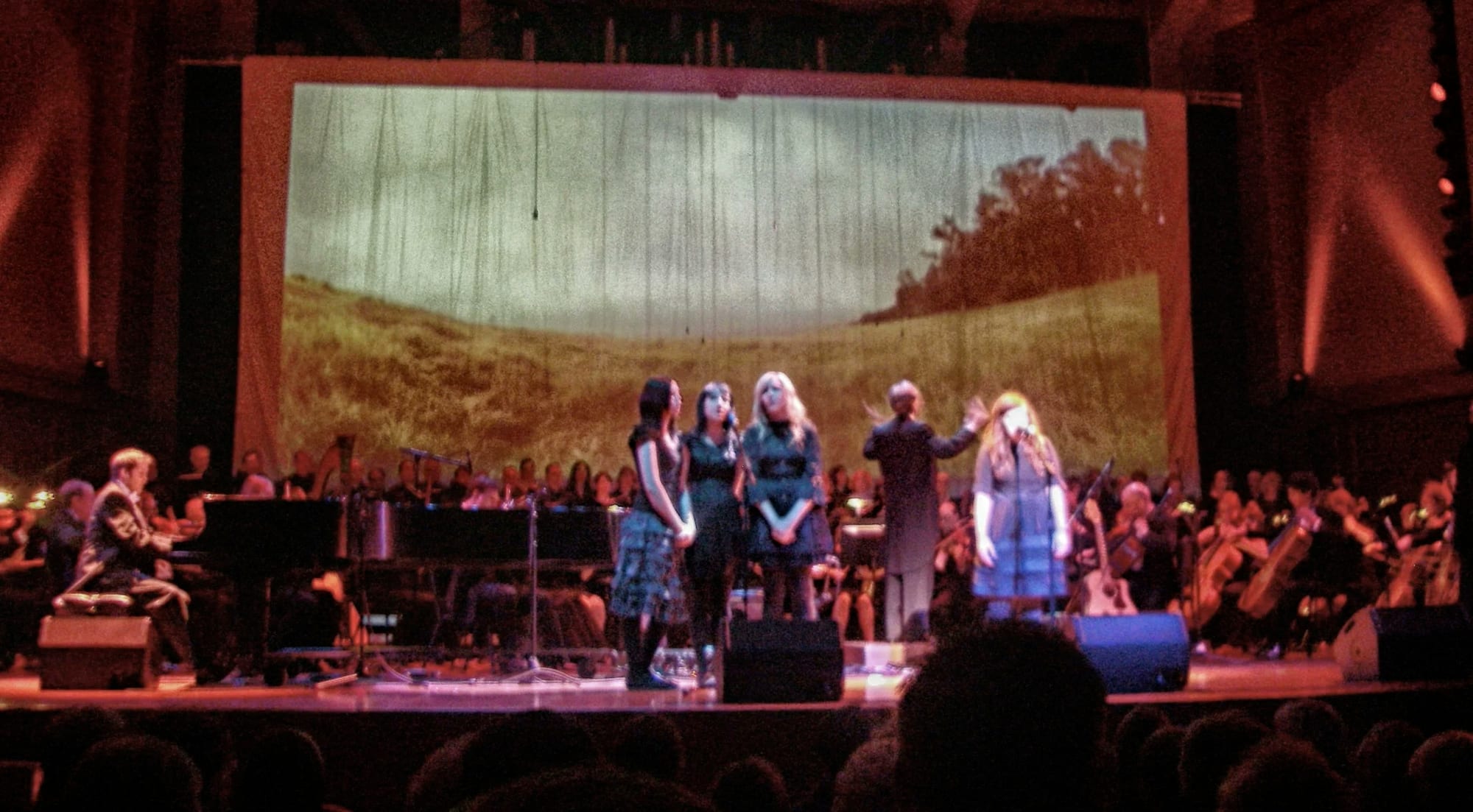
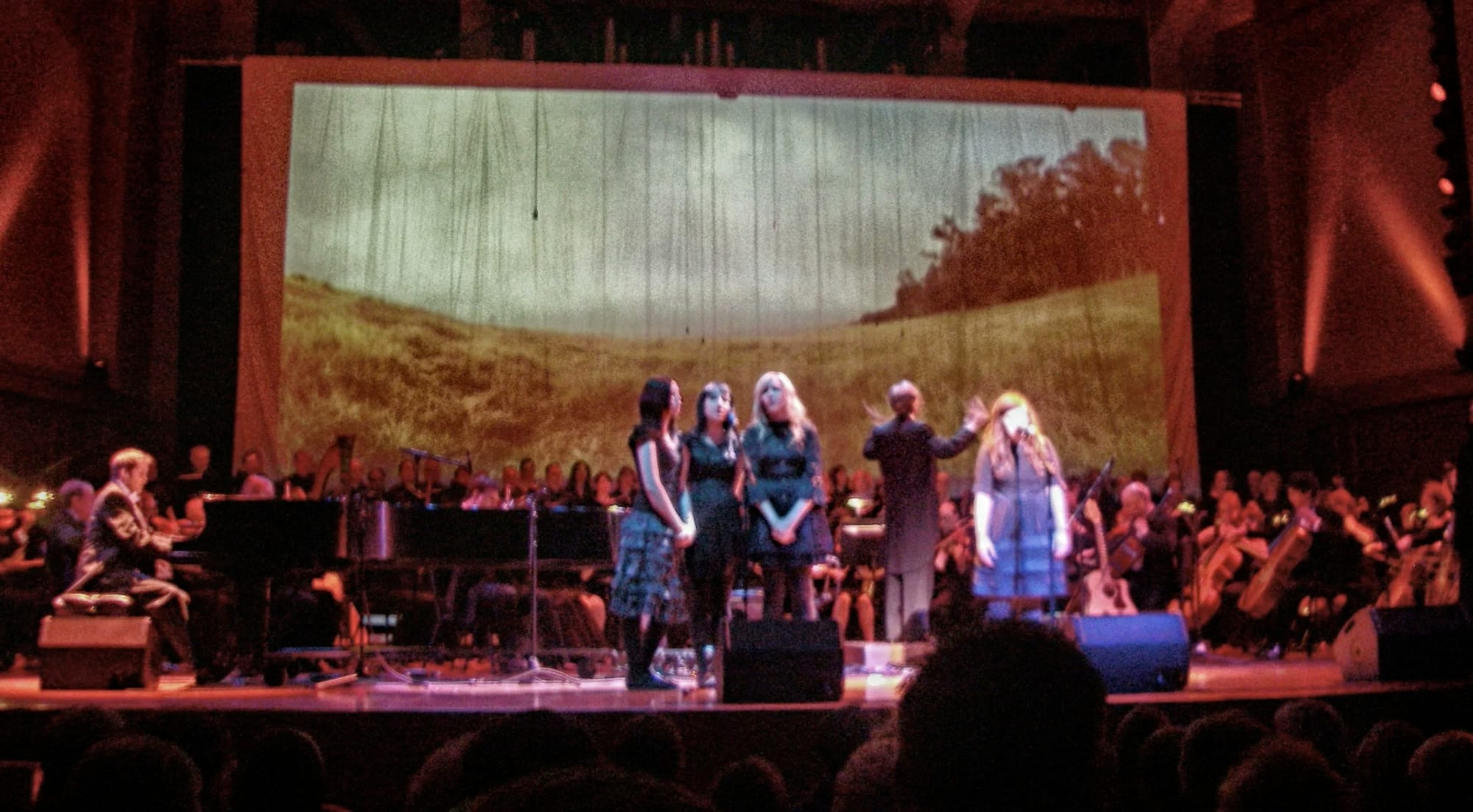
For a Grammy-winning composer's benefit concert at Benaroya Hall, the full width of the stage carried a single photograph behind an eighty-piece orchestra and a children's choir. The composer supplied the exact length of every piece. Each image was rendered as one unbroken move, slow enough that nobody registers it as motion, timed so that the crescendo and the arrival on a hidden detail land in the same second. It is the only performance credit in the portfolio.
In 1998 Mateo Messina walked past the Benaroya Hall construction site on his way back from lunch, went into the symphony offices, and told the venue manager he wanted to debut his first symphony there. He had never written a symphony. He could not read music. He bought a children’s book about the instruments of the orchestra and wrote the thing by ear in MIDI.
After that first concert a colleague told him about a daughter who had died of a brain tumour, and about the piano at Seattle Children’s Hospital. Messina started going in to play for the children, then quietly gave the profits of his next symphony to the hospital, and kept doing it. Seattle Met recorded how long that stayed private:
“I didn’t tell anybody that until almost a decade [later]” — Mateo Messina, to Seattle Met
Once he did tell people, the concerts went from three thousand dollars a year to a quarter of a million. Over twenty years the series raised more than two million dollars for the hospital.
The eleventh of them was 7 November 2008, and it was titled An American Symphony. (It shares that title with a much better-known piece written for a 1996 film. They are unrelated.) For that one Messina wanted the hall itself to carry an image: the full stage backdrop, behind his own orchestra, a children’s choir and a long bill of guest performers.
Projected photography in a concert hall fails one of two ways. Either it cuts, and the cuts fight the music, or it sits still and dies. The approach here was neither. Messina supplied the exact duration of every composition. Each panoramic image was rendered as a single unbroken move, a slow push or a slow pull, gradual enough that an audience does not perceive it as motion, and timed so that the music cresting and the frame arriving somewhere previously invisible happened together. The image resolves at the same moment the piece does.
That only works because of what a gigapixel panorama is. There is enough resolution in the file to travel across it for four minutes and still arrive somewhere sharp. An ordinary photograph cannot do that. It is the same property that makes an observation-deck kiosk work, aimed at the opposite problem: not letting a visitor explore at their own pace, but moving an entire hall through a frame at a speed somebody else chose.
What Gavin did
- Selected the panoramic images with the composer. Messina’s own words, quoted on Gavin’s archived project page: “I’ve worked with Gavin Farrell to handpick each image”
- Prepared and rendered each one as a single continuous move
- Timed every move to the composer’s supplied duration for that piece, so the arrival and the crescendo coincided
The credit is a direct attributed statement from a Grammy-winning composer, and it is hosted on Gavin’s own site, so it is not independently attested. What is independently attested is the event: a performer’s own 2008 mailing announces Messina’s eleventh annual Children’s Hospital benefit at Benaroya Hall under this exact title on this exact date.
“The Big Blue,” a performance from the concert, is on Mateo Messina’s own YouTube channel — a full wide shot of the stage shows the choir, orchestra, and Messina at the piano with the panoramic photograph projected behind them exactly as described above. Original 2008 camcorder-quality recording (712×480); the picture quality is a period artifact, not a defect in this transfer.
Venue Benaroya Hall, Seattle · 7 November 2008 · eighty-piece orchestra and children's choir